Dental Care Essential for your pet’s overall well-being. Care You Can Trust From a team you can love.

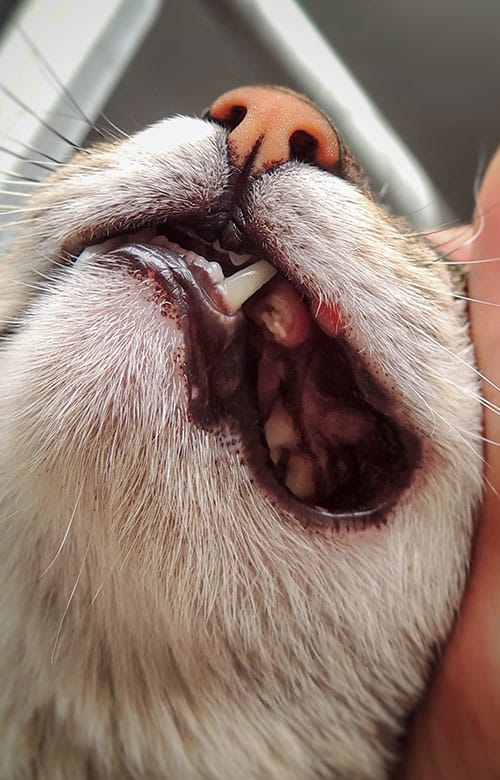
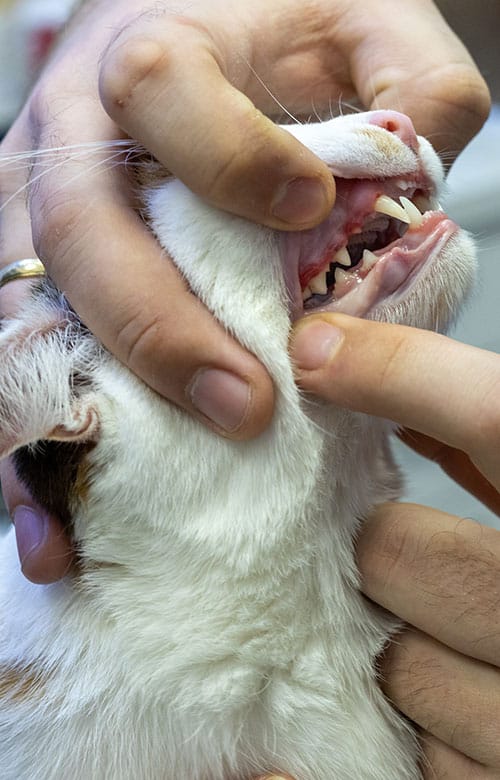
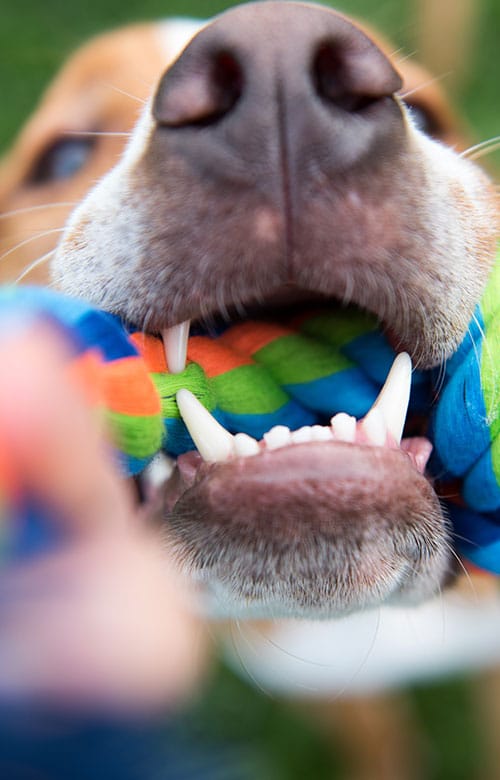
Maintaining good oral health is essential for your pet’s overall well-being. However, it can be challenging to detect dental discomfort in pets, as symptoms are not always obvious. Additionally, most pets are not comfortable with having their mouths examined, making regular at-home assessments difficult. Unlike humans, pets do not brush their teeth regularly, which allows bacteria to form a sticky layer called dental plaque after eating. If left untreated, plaque hardens into dental calculus (tartar), leading to gum inflammation, irritation, and damage to the teeth and surrounding structures. Severe dental calculus and chronic inflammation can weaken the teeth, cause pain, and eventually lead to tooth instability. Additionally, it can result in persistent bad breath, making those affectionate moments with your pet less enjoyable. Dental Care for Dogs and Cats

A comprehensive dental examination and professional cleaning under general anesthesia is the gold standard for pet dental care. Under anesthesia, our trained veterinary team can thoroughly examine the teeth, gums, and other oral structures to detect any abnormalities or signs of disease. Many dental issues go undetected without a full oral examination under anesthesia.

The Importance of Professional Dental Cleaning Under Anesthesia
Dental Cleaning Process

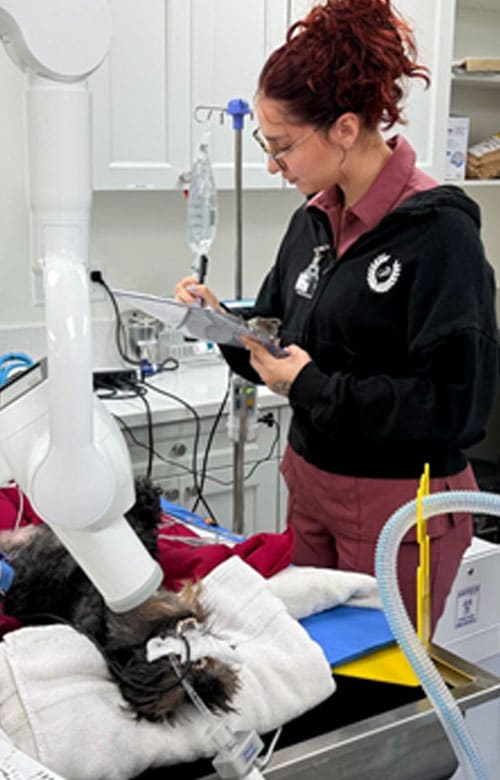
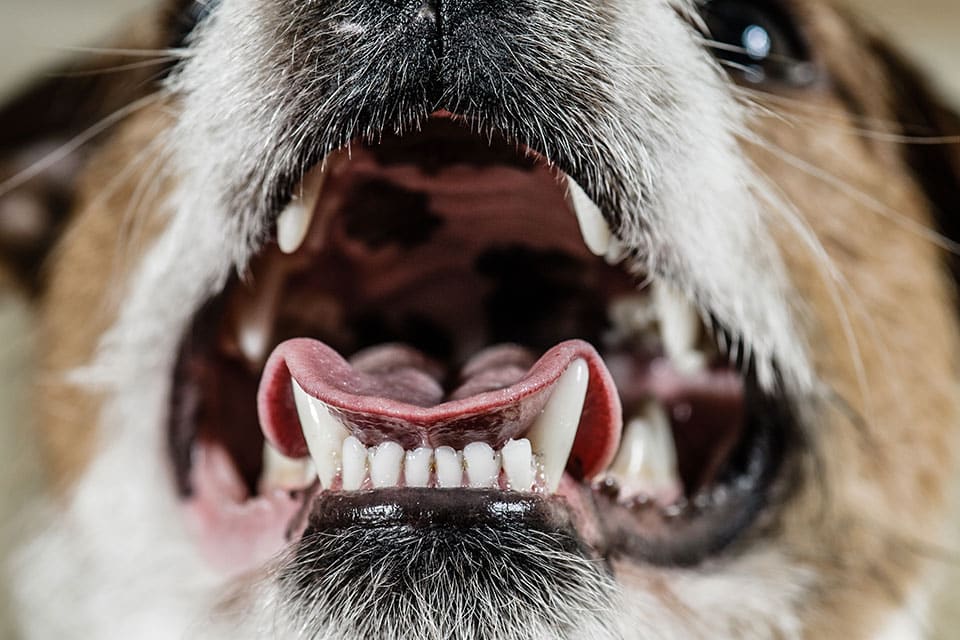
After the pet is anesthetized, a thorough examination of the oral cavity will be done by our professionally trained staff. An ultrasonic scaler is used to remove hardened dental calculus, which cannot be eliminated with regular brushing. The teeth are then irrigated and polished. If periodontal disease or other concerns are identified, we will communicate with you about further treatment options. After the procedure is complete, the pet will be carefully monitored and safely recovered from anesthesia. Ultrasonic Scaler Exam Irrigate & Polish Monitor

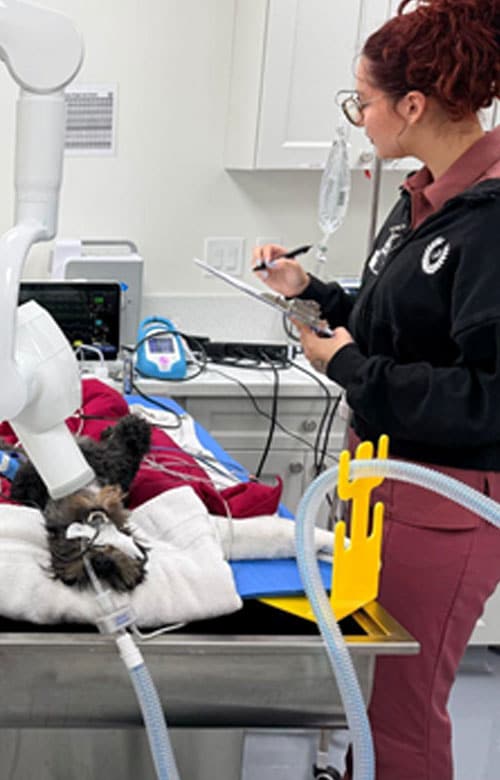
It has now become the standard of care to take dental X-rays for pets during dental procedures. At Fullerton Pet Clinic, we offer full-mouth digital dental X-rays under anesthesia as part of our dental prophylaxis procedure.

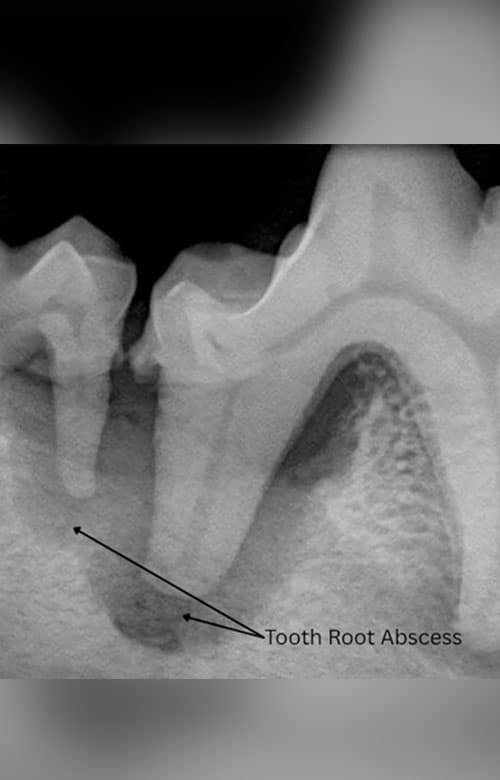
Dental X-rays are invaluable in identifying dental diseases that cannot be seen by the naked eye or detected through probing alone. Once your pet is under anesthesia for dental cleaning, we can take a full-mouth series of digital X-rays to assess for any underlying dental issues, such as root infections, abscesses, or bone loss.
Dental X-Rays for Pets

Because our X-rays are digital, the images are generated instantly—providing fast, accurate results that help reduce anesthesia time. Even teeth that appear healthy externally may have hidden problems beneath the gumline, which is why we recommend full-mouth dental X-rays with every dental prophylaxis procedure. This ensures that all teeth are healthy both above and below the surface.

Digital dental X-rays are also crucial after tooth extractions. Although our experienced doctor performs extractions with great care, X-rays allow us to confirm that no root fragments remain and that the extraction site is complete. Without X-rays, it would be impossible to verify the full removal of a tooth.
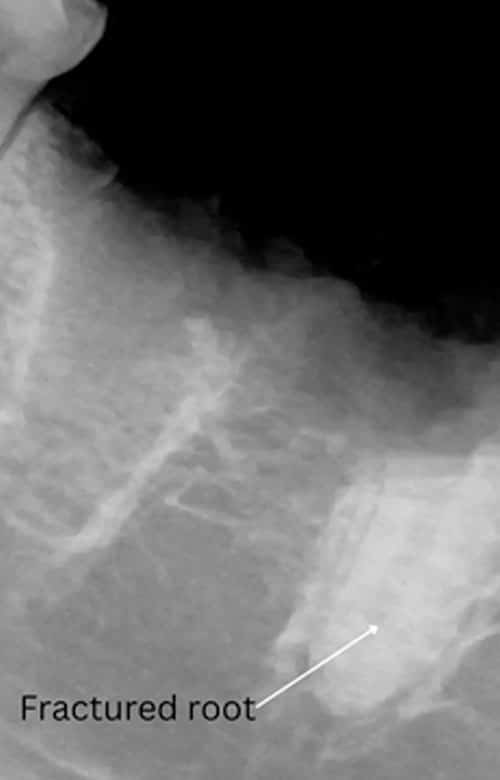
Dental Care for Dogs and Cats

We understand that anesthesia is a common concern for pet owners. At Fullerton Pet Clinic, we prioritize your pet’s safety by performing thorough pre-anesthetic evaluations to ensure they are healthy enough for the procedure. If your pet has an underlying medical condition, our veterinarian will discuss any necessary precautions and tailor the anesthesia plan to minimize risk.

Our clinic is equipped with state-of-the-art monitoring and diagnostic equipment to enhance the safety and effectiveness of every procedure. We are committed to providing the highest standard of care to protect your pet’s health.
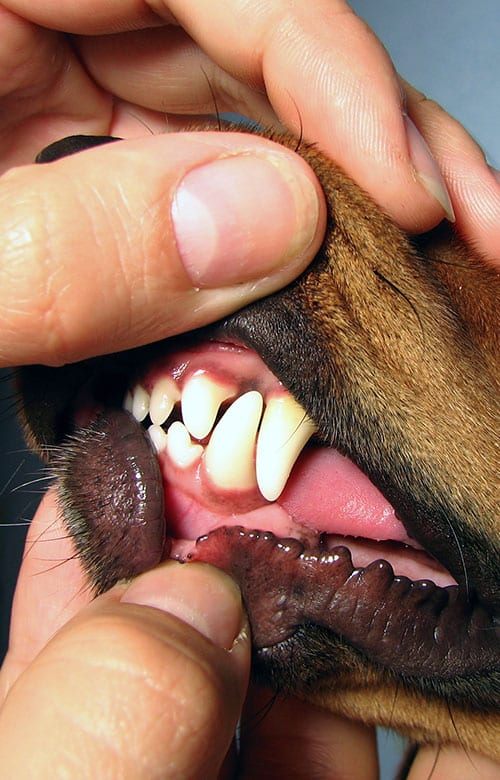
Ensuring Anesthesia Safety at Fullerton Pet Clinic

Non-Anesthetic Dentistry (NAD) FAQs

Non-anesthetic dentistry (NAD), also known as anesthesia-free dentistry, is not recommended for pets, according to the American Animal Hospital Association (AAHA) Dental Guidelines.
The main concern is that NAD only cleans the visible surfaces of the teeth, which can create a false sense of effectiveness. The most critical part of a dental cleaning—subgingival cleaning (removing plaque and tartar beneath the gum line)—cannot be done properly without anesthesia. This area is sensitive, and cleaning it without anesthesia can cause pain and distress to your pet.
There are several risks associated with NAD, including:
  • Inadequate cleaning below the gum line, which can lead to periodontal disease
  • Stress and discomfort for the pet during the procedure
  • Potential injury or aspiration
  • Missed diagnoses of underlying dental issues
We recommend scheduling a professional dental cleaning under anesthesia, which allows for a thorough and safe evaluation and treatment. If you have questions or would like to book a consultation, please call us or make an appointment with our veterinarian.